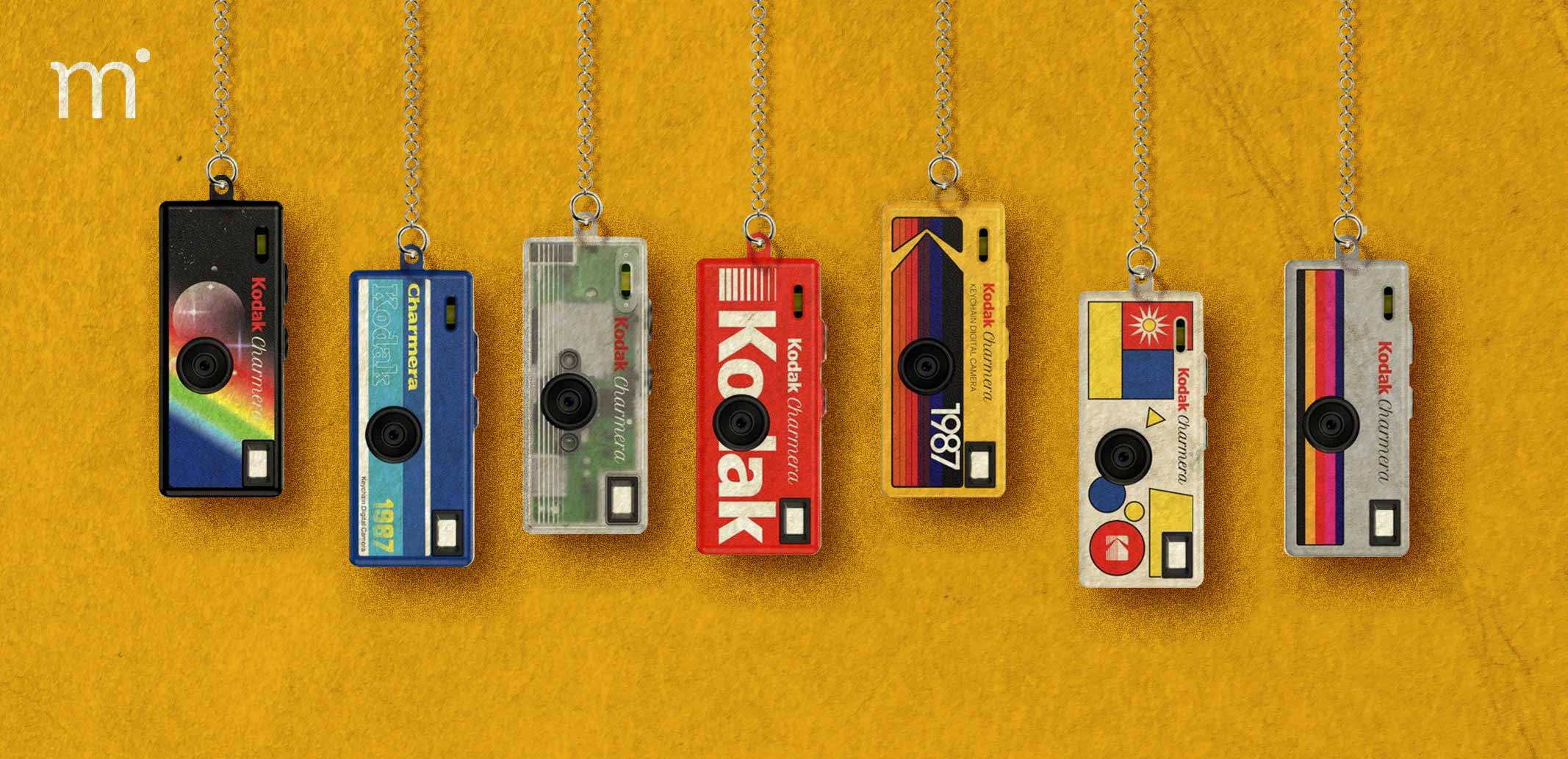
Nostalgia in Frame
06 March 26
When Kodak released the Kodak Charmera, it became a clear example of how a brand can ride a cultural wave without losing its identity.
Once a superior force in film photography, Kodak hesitated when the digital era began. Although it had pioneered early digital cameras, the brand remained deeply attached to its expertise in film and was slow to fully embrace change. While the world shifted, Kodak stayed rooted in its past. By the time it tried to catch up, it was already far behind-struggling to survive with what remained of its legacy.
Decades later, in 2025, Kodak reappeared within a new cultural moment shaped by younger generations. As younger generations continued to shape global trends, Kodak made a small comeback by riding the wave of bag charms and blind boxes. These objects had become part of everyday personal aesthetics. Some took the form of furry figures, while others appeared as simple beaded accessories. Alongside this movement, blind boxes emerged as a playful ritual for “kiddults” to reconnect with their inner child through surprise and curiosity. This shift opened an unexpected door for brands to participate in a new form of emotional expression, including Kodak as a way to reintroduce its relevance.
Kodak Charmera has instantly caught attention. The tiny camera features a 1.6-megapixel resolution, a small screen, basic photo and video functions, and a selection of color effects. Packaged in a blind box with six designs and one secret limited edition, it blends technology with collectible culture. From a technical perspective, the quality is far from perfect. Yet this very imperfection becomes its strength, triggering nostalgia that feels accessible and acceptable across generations.
For Gen Z and Alpha, nostalgia is not something they experienced firsthand, but something they seek to feel. Grainy visuals and low resolution become an aesthetic language of authenticity and individuality. For Millennials, Charmera delivers a more direct sense of nostalgia, reintroducing analogue sensibilities through a contemporary format that feels playful and socially relevant.
Long associated with analogue photography, Kodak chose not to observe the trend from a distance, but to participate in it—without over-innovating or abandoning its expertise. The strategy was precise: innovate without becoming unrecognizable, recreate without losing credibility, and enter a cultural moment that genuinely aligned with the brand’s DNA. In doing so, Kodak reintroduced itself naturally without appearing to be trying too hard.
Nostalgia can be a powerful tool, but only when guided by cultural awareness and a deep understanding of the audience. If you’re curious about how your brand can better understand the culture your audience lives in, Milestone is ready to explore that journey with you.